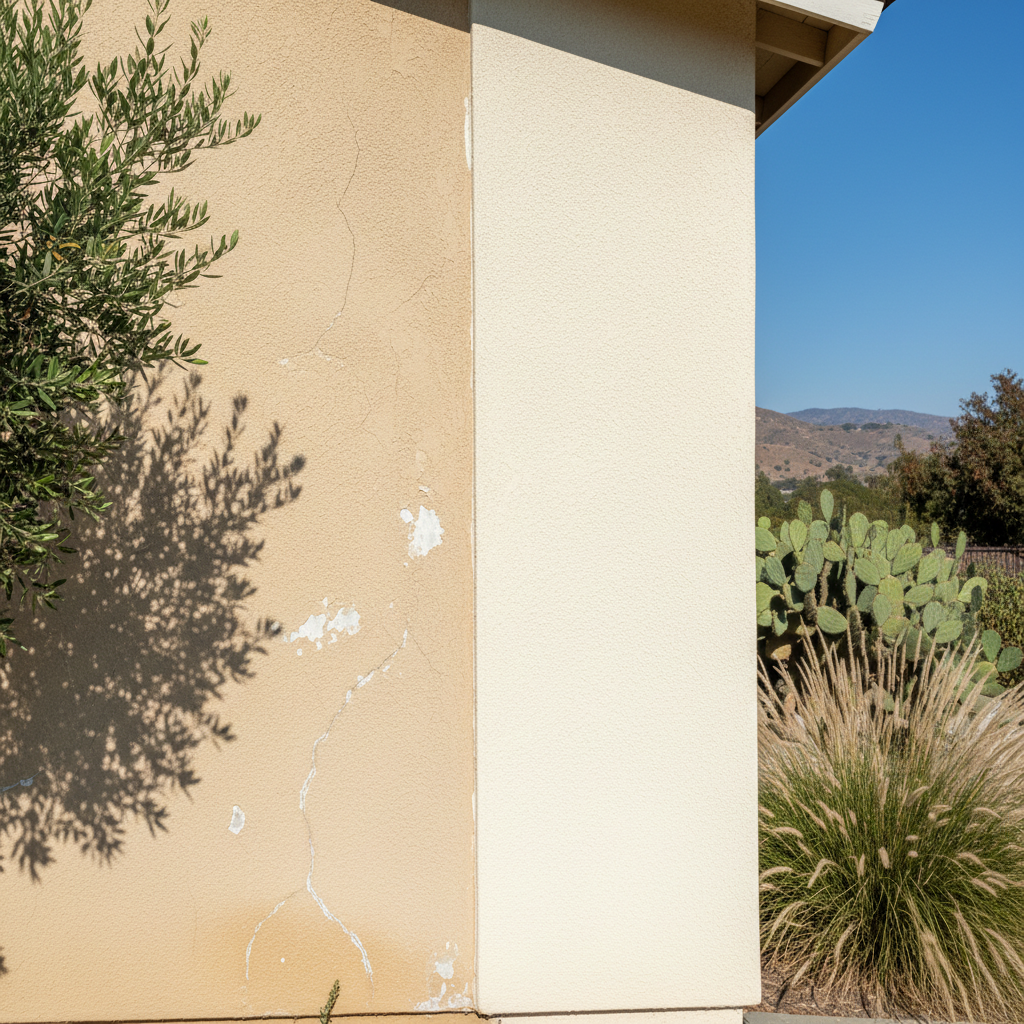
Alright, let's talk stucco. If you're thinking about putting new stucco on your house here in Pomona, or maybe just fixing up what you've already got, you'll probably hear about two main types: traditional (sometimes called hard coat) stucco and synthetic (often known as EIFS, which stands for Exterior Insulation and Finish System). People ask me all the time which one's better. Honestly, they both have their place, but understanding the pros and cons for our specific climate and the homes around here makes a huge difference.
Traditional Stucco: The Old Reliable
This is what most folks picture when they hear 'stucco.' It's been around for centuries, literally. It's a mix of cement, sand, lime, and water, put on in several layers over a lath (usually wire mesh). Once it dries, it turns into a rock-hard, breathable shell.
- Cost: Generally, traditional stucco can be a little cheaper upfront for the materials. The labor involved is pretty intense, though. You're looking at multiple coats, and each one needs to dry properly. So, while materials might cost less, the installation time can even that out.
- Durability: This stuff is tough as nails. It resists impacts, it's fire resistant, and it can last for decades—50 years or even more—if it's installed right and looked after. We see a lot of older homes in places like Lincoln Park or Phillips Ranch with traditional stucco that's still holding up great, even after all these years of hot summers and the occasional heavy rain.
- Maintenance: It's pretty low maintenance, honestly. You'll want to keep it clean, maybe give it a gentle power wash every few years. Cracks can pop up, especially with ground movement or settling, and you need to repair those to keep water out. But overall, it's not high-strung.
- Appearance: It has that classic, solid, masonry look. You can get different textures, from super smooth to quite rough, and you can paint it any color you like. It breathes, which is a good thing for older homes that might have some moisture trapped in their walls.
Synthetic Stucco (EIFS): The Newer Kid on the Block
EIFS is a bit of a different animal. It's a multi-layered system that includes an insulation board (think foam), a base coat with a fiberglass mesh reinforcement, and then a finish coat that's usually acrylic-based. It's not cement-based in the same way traditional stucco is.
- Cost: EIFS can sometimes be more expensive upfront, especially if you go for a thicker insulation board. The application process might be quicker than traditional stucco since it's fewer layers of heavy material. But, it really needs specialized installers who know their stuff.
- Durability: It's very flexible, so it's less likely to crack from minor settling than traditional stucco. It's also incredibly energy-efficient because of that insulation layer, which can be a real bonus during our hot Pomona summers. However, it's more prone to impact damage. A hard hit can dent or puncture it, and if water gets behind the system through a crack or poor flashing, it can cause big problems because it doesn't breathe as well as traditional stucco.
- Maintenance: Like traditional stucco, it needs cleaning. But you've got to be extra careful about sealing any penetrations (windows, doors, pipes) and fixing even tiny cracks or holes right away. Water intrusion is EIFS's biggest enemy. If you've got trees dropping branches or kids playing hard near the house, you'll want to inspect it regularly.
- Appearance: EIFS gives you a huge range of colors and textures, even more than traditional stucco. You can get very smooth, modern finishes or make it look like traditional stucco. It's often chosen for its seamless look and design flexibility.
So, Which One Should You Pick?
For most homeowners in Pomona, especially if you're looking for that classic, long-lasting, low-fuss exterior, I usually lean towards traditional stucco. It's a proven system that holds up incredibly well to our climate, it breathes, and when it's time for repairs, they're generally straightforward. The initial investment might feel similar to EIFS once labor is factored in, but its resilience and ease of maintenance often make it the more practical choice for a residential property here.
Now, that's not to say EIFS is bad. If you're building a new home and energy efficiency is your absolute top priority, and you're really committed to careful maintenance and inspections, EIFS can be a great option. It provides superior insulation, no doubt about it. But you've got to stay on top of it. For existing homes, especially those built before the 90s, traditional stucco often just integrates better with the existing structure and aesthetic.
Ultimately, it comes down to what matters most to you. Do you want the time-tested durability and lower long-term risk of traditional stucco, or the advanced insulation and modern finish options of EIFS, understanding its specific maintenance needs? Give us a call at Pomona Stucco Solutions, and we can come out, look at your specific situation, and talk through what makes the most sense for your home and your budget. We've seen it all, and we're here to help you make an informed decision.